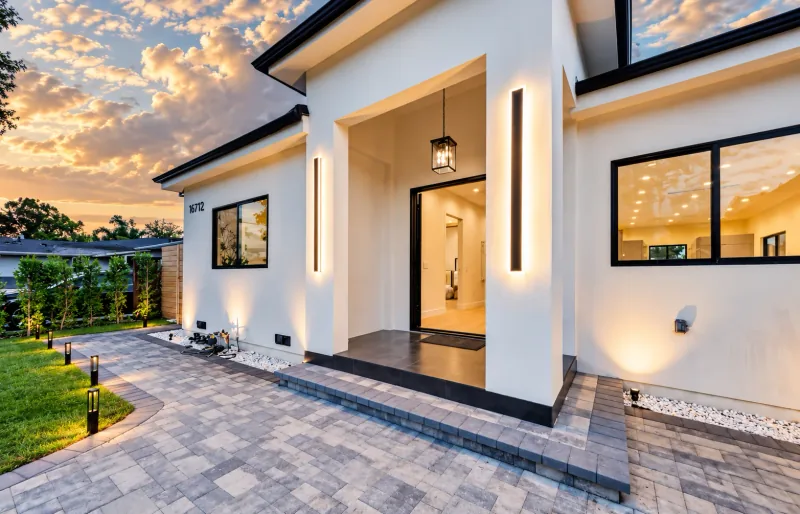
A completed project example: Granada Hills
Dream Construction completed a 2,222-square-foot custom home in Granada Hills in 2026, with six months of construction. The project gallery shows the finished exterior, shared living spaces, kitchen, bedrooms and bathroom details.
That six-month figure describes this selected project's construction period. It is not a total duration from initial design to move-in, and it is not a promise for another home. A useful comparison needs the proposed home's scope, site conditions and starting stage, as well as its square footage.
Define what must happen before the construction clock starts
Your starting point matters. An owner exploring a property, an owner revising a design and an owner with approved plans have different work ahead. Identify the remaining property investigations, design coordination, approvals and selections before comparing proposed start dates.
City of Los Angeles projects use LADBS plan-review and permitting processes. Other Valley jurisdictions have their own departments. Confirm the responsible authority and the status of the actual application; a planned submission date is not an approval date.
Read the building schedule in stages
A clear schedule connects the work with the decisions and approvals needed to proceed. The sequence below is a discussion framework, not a fixed number of weeks for each stage. Your builder should adapt it to the approved plans and site.
Build inspections into the sequence
Inspections are part of the construction schedule. LADBS describes work being reviewed in successive stages and requires relevant work to remain visible for inspection before it is covered. Ask how inspection readiness, any corrections and the next trade's work are coordinated.
At progress meetings, distinguish work that is installed from work that has received the required approval. That distinction gives you a clearer picture of what can happen next.
Keep a decision calendar alongside the build schedule
A decision calendar gives each outstanding choice a due date and identifies the work it affects. It is more useful than choosing all finishes at once or waiting until the installer arrives. Ask for alternatives when a preferred item cannot meet the project's needs or delivery schedule.
- Windows and exterior doors: confirm the specified configuration before ordering.
- Kitchen and appliances: coordinate dimensions and service needs with the cabinet and systems layouts.
- Bathrooms: resolve fixture locations, tile selections and storage details before related work proceeds.
- Changes: document the effect on scope, ordering and timing before treating a revised choice as agreed.
- Progress: request the next milestones, outstanding decisions and any changes to the expected sequence.
Get a schedule for your property and starting stage
Bring the address, available drawings, approval status and your preferred timing to the first conversation. Mention any existing home to remove or retain, access constraints and important household dates. These details help the team explain what can be estimated now and what needs further review.
Dream Construction coordinates planning, design, permitting and new-home construction across Los Angeles and the San Fernando Valley. We can discuss the entire process or start with the stage you have already reached, then define responsibilities and a schedule around your project.